

A kitchen without faucets is just a keyboard without backspace! Can you imagine a cooking space without kitchen faucets?
Most of the water we use every day goes through our kitchen sink. The faucets are the unsung heroes behind every delicious dish you prepare.
No matter what you do, wherever you go, you can’t ignore its blessings. You will need to wash your hands, clean the veggies, use water while cooking, and do the dishes for the rest of your life. After every few years, you may need to change its parts, fix leaks, replace, or install a new one. The interaction with the kitchen faucet is unavoidable.
As you will be using it every day multiple times, even a simple feature of a kitchen faucet will make your life a lot easier.
The knowledge of different types of faucets, their parts, benefits, and DIY guides can come in handy anytime!
We are the content team of Litrohub, a group of professionals on home appliances. We will be sharing guides about kitchen faucets in this article.
Sit tight and keep reading!
Kitchen faucet and where it came from
Kitchen faucets have been around since ancient times. In 1700 BC, spring water was used to supply water to private houses. Romans used the river and spring water to provide a continuous water supply in thousands of homes and bathrooms.
The modern faucets were invented in the eighteen centuries. Faucets of that time had two handles for warm and cold water.
During the Industrial Revolution, the necessity and availability of various materials led to the invention of different types of faucets. From the early 20th century to the present time, brass has been one of the most popular materials for faucets.
Parts of kitchen faucet
What if a part of your kitchen faucet gets broken but you do not know its name? You could have easily bought the part online and fixed it DIY. But when you don’t know, you are more likely to hire a plumber, which is costly.
To stop that, let’s go through the common parts of kitchen faucets.
Aerator: If you unscrew your faucet head, you will see a disk with tiny holes in it. It’s called the aerator. The aerator mixes air with water and creates a consistently desirable flow of water. It can also work as a filter. The aerator also minimizes the waste of water.
Faucet handles: Faucet handles are the liver that is used to turn on, off, and control the faucet.
Spray hose: Spray hose is an extended part of the kitchen faucet. It provides moderately pressured water for easy cleaning.
Valve: A valve is a cartridge-like part of a faucet that controls the water temperature and flow. If you notice issues in water flow or temperature. It may indicate a bad valve.
Deck plate: A deck plate is the plate on which the faucet is mounted. It also works to cover the extra holes of a sink. Not all the faucets have a deck plate.
Body: The faucet body is the main functional part of a faucet. You can pull out the body for convenience for some types of faucets.
Gasket: Gaskets are the parts that make your faucet leak proof in the joints. It can be made of rubber or metal.
Washer: It is a ring-like part that also works to make the system waterproof in some joints. It’s made of rubber, metal, or both. The aerator usually contains a washer.
Materials of Kitchen Faucet
There are several different types of faucets based on the material. The material of a kitchen faucet makes the biggest difference in price and quality. Let’s learn about them.
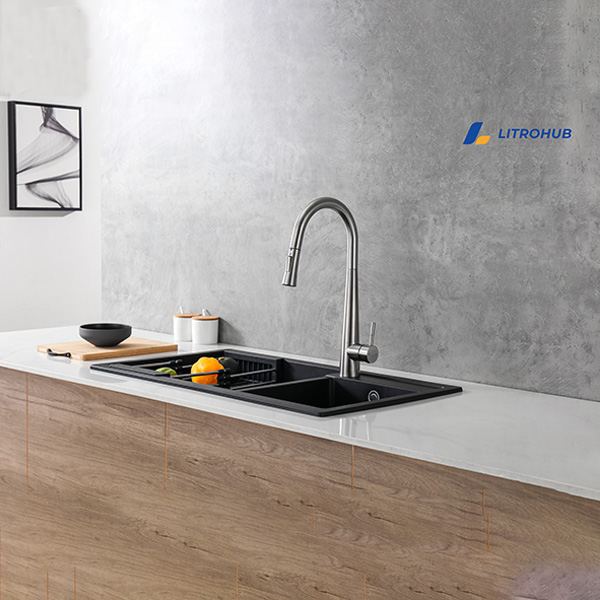
Brass kitchen faucet: Brass kitchen faucet is the most common and convenient. Brass is made of copper and zinc, which makes it water-resistant and long-lasting. Brass kitchen faucets are stylish and often coated with modern color. It’s also cheaper than some other popular options.
Chrome Kitchen faucet: The chrome kitchen faucet is made of metal which is coated with chromium. Chrome faucets have a rich metallic color. It’s convenient and easy to clean and maintain. It is a bit more prone to scratches and watermarks.
Stainless steel faucet: Among all types of faucets, stainless steel faucets are the most durable and long-lasting. It’s resistant to scratch but prone to getting a watermark if not wiped out. Stainless steel kitchen faucets are a bit pricey.
Bronze: Bronze faucets are quite aesthetic and have an antique-like character. It will sync perfectly with the proper kitchen design. Bronze kitchen sink faucets are expensive and they require extra maintenance.
Coated: Kitchen faucets of different materials can be coated for colors, longevity, and style. Paint, plastic, and rubber can be used to cover the faucet body.
Types of Kitchen faucets
There are about a dozen types of faucets in the market with different styles and features. But we assure you that choosing one will not be hard. ( we promise) Before jumping into the types let’s finish some necessary discussions.
Firstly, there are 2 types of kitchen faucets based on the mounting place. If the faucet is built to mount in the sink, it is a sink mounting faucet.
If the faucet is designed to be mounted on a wall, it will be a wall-mounting faucet. We can easily expect most of our readers to be looking for sink mounting sink information. Because that’s a lot more common than the wall-mount faucets.
Secondly, there can be faucet types based on the number of holes. There can be one to three required holes for different types of faucets. However, if you want an extra soap dispenser and water sprayer, the number of holes can increase.
If you choose the easy way, buy the faucet that matches your sinkhole. However, if you have 3 holes in your sink and choose a hole faucet, that is also possible with a plate that covers the extra holes. You may also get a deck plate with single-hole faucets.
Now let’s dive into the main kitchen sink type you were waiting for.
- Pull down faucet
Pull-down faucets are the most common. As the name suggests, you can pull down the faucet head and wash things with more ease. When done washing, just leave the head, it will fit in the place itself.
2. Pull out faucet
Pull-out and pull-down of the faucet may create some confusion. But they do exactly as their names. Pull down only comes down, while pull out can be pulled out and moved 360 degrees. They add flexibility and easy cleaning features to your kitchen sink.
3. Single handle faucet
Single-handle faucets have only one handle to control the water flow and the temperature of the water. By pulling the handle up and down you can turn off and on the faucet. The amount of up and down controls the water pressure.
Turning the handle left and right will help you control the water temperature. You may experience a bit of difficulty getting your desired temperature.
4. Double handle faucet
Double-handle faucets have two handles. One for cold water and the other for hot water. Most times the handles stay a few inches away from the faucet. But some faucets may have both handles attached to the faucet body.
5. Commercial faucets
Commercial kitchen faucets are quite higher than regular kitchen faucets. This is because commercial spaces may require washing and filling larger appliances. Commercial kitchen faucets are also very powerful to enhance the ease of working with large dishes.
6. Separate spray kitchen faucet
You may sometimes need both a stable water source and a moveable water source. This is where separate spray kitchen faucets will come in handy. But for this, you will need one extra hole in your sink.
7. Pot filler faucet
Pot filler faucets are wall-mounted faucets without any sink. The faucet is used to fill up the pot easily while cooking. Some of the pot filler faucets are moveable.
8. Motion detection faucet
Motion detection faucets are a really smart and modern kitchen solution. It is also called touchless kitchen faucet. If you are among the people who do not feel right to touch the handle after washing hands, motion detection faucets were made just for you. Touch faucets also minimize the wastage of water.
Popular color of kitchen faucet
There is no shortage of color variations when choosing kitchen faucets. Just look at the variations of brass colors– shiny brass, matt brass, antique brass, golden brass, polished brass, it goes on and on. Brands have many color options to choose from.
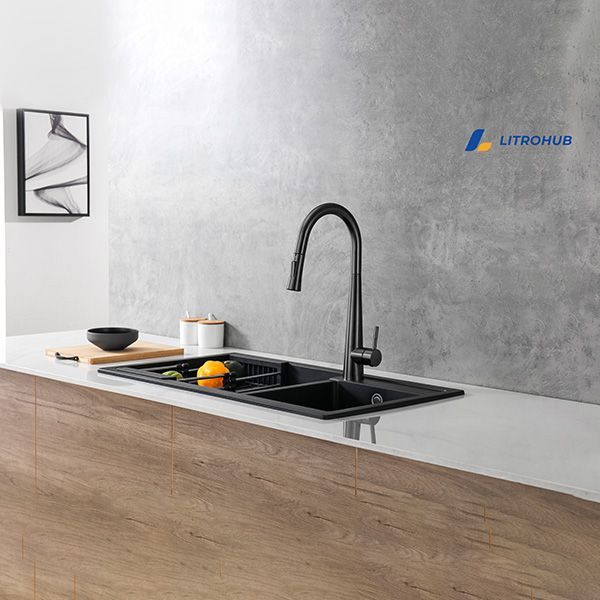
But in 2024, people are getting a bit lazy to choose from all those! That’s why black is the most trendy color of kitchen faucets today. Chrome and satin are also the standard and popular colors for kitchen faucets.
But when it comes to choosing a color, just trust your taste and consider the surroundings of your kitchen. ( Kitchen interior)
Choosing the best kitchen faucet for you
Now you know all the colors, types, and materials of kitchen faucets. It’s time to find the best kitchen faucet for you.
To choose the one that fits you, you need to consider three things. Style, features, and installation type.
Installation type should be considered first when you are looking for a kitchen faucet. Count the number of holes you have in your sink. If there are 3 holes, you should look for a three-hole faucet. You can reduce the number of holes with a deck plate. It helps reduce the hole number. If you want to increase the hole number, contact a plumber for the job.
Now features. The feature of your kitchen sink depends more on you. The feature you feel is the right one for you (can’t go wrong). The second factor that will help you choose a faucet is your need.
If you do a lot of washing, pull-down or pull-out faucets will work best. Need a more accurate temperature? Get a good branded double-handle faucet. A separate spray faucet will come in handy when you need multiple water sources. There are other factors you may need to consider. If you have pets and babies, you should keep that fact in mind.
The third factor in choosing the kitchen faucet is style and color. Your new faucet should match your kitchen’s current style. If it is modern, get a modern-looking faucet. For a classic, commercial, and antique-looking kitchen, choose accordingly. There should be no shortage of style in the market.
How to remove an old kitchen faucet
Removing old kitchen faucets may seem quite hard. But with the help of some basic tools and guidance, anyone can do it. We have dedicated content for removing and installing kitchen faucets. I’m sure that guide will be enough to solve any issue with replacing your kitchen faucet.
How to install a kitchen faucet? Should you DIY?
Installing a kitchen faucet yourself can help you save some money. But doing it wrong may lead to unwanted consequences. However, by following a step-by-step process, you can do it flawlessly. Check our ultimate guide about installing kitchen faucets.
How to unclog a kitchen faucet
You and I can take a day off or two, but a kitchen faucet can not. It has to work 365. Continuous usage can create clogs and jams inside the kitchen faucet. Sometimes removing the parts and scrubbing with a brush can solve the issue.
Other times, you may need to use some homemade cleaners to unclog and clean your kitchen faucet. Check out our detailed guide explaining all the cleaning solutions for kitchen faucets.

General problems and fixes
Check out the common problems of kitchen faucets and their fixes-
- Loud Faucet
If you hear loud noises from your kitchen faucet, the washer may be displaced or damaged. Changing the washer can solve the issue.
- Lack of water pressure
Water pressure problems are common. Especially if the supply of water is not that good in quality. Dirt and debris can easily accumulate in the aerator and cause such problems. Cleaning the aerator is an easy fix for the problem.
- Leaking faucet
What can be more irritating than having a leaking faucet? It wastes water and increases your bills for no reason. A bad washer or gasket can cause the problem.
- No water
If the water is not coming from your faucet, the valve may be broken. Get a new valve and replace it to fix it.
- Tight handle
Dirt, rust, and debris can make your faucet handle tight. Cleaning and applying silicone-based oil can solve the problem.
Care and maintenance of kitchen faucet
Care and maintenance of kitchen faucets can vary slightly depending on the material. In general, it does not require much effort. There are three basic steps for maintaining your faucet
- Clean the faucet with a damp cloth and keep it dry every day.
- Cleaning the inside parts of the faucet once or twice a year (especially if you have hard water)
- Cleaning and replacing the aerator when needed.
If you are more interested in the maintenance of kitchen faucets, check out our kitchen faucet maintenance guide.
Litrohubs kitchen faucet
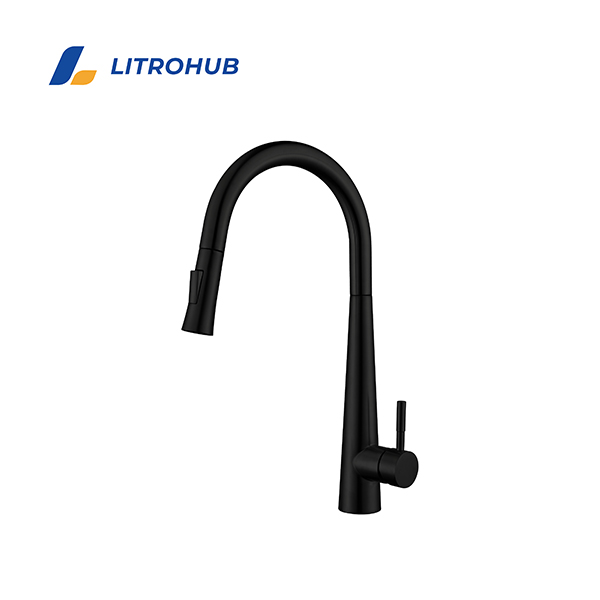
Looking for a modern kitchen faucet in Ontario? Litrohub presents North American Standard kitchen faucets for smart home spaces. We have 3 options– Chrome, Matt black, and satin with minimalist designs and elegant style.
Our black kitchen faucet can fit in any kitchen space seamlessly. While chrome and satin may require a bit of matching with the surroundings. For buying kitchen faucets in Canada, check out Litrohub’s premium kitchen faucet collection.
Conclusion
Until something gets wrong, we don’t really understand the importance of kitchen faucets. Just a bit of maintenance is enough to keep your kitchen faucet in good shape. Plus, most issues with faucets are not that complex and DIYable. Upgrading your kitchen faucet can improve comfort a lot with a little effort.